2026 U.S. HOME SAVINGS GUIDE
HOME ENERGY REBATES
CHECK YOUR STATE FIRST
Official program · Eligibility · Approval timing
Illustrative AI-generated cover photograph. This image is not evidence of any currently active offer, government approval or official brand affiliation.
At a glance: 3 practical checks
1. FIND YOUR STATE
Start from official federal or state program information.
2. CHECK ELIGIBILITY
Confirm your household, home and eligible equipment or project.
3. ASK BEFORE PAYING
Verify preapproval, participating contractors and rebate rules.
Before acting: Use the official source links in this article and verify live dates, restrictions and eligibility.
Last reviewed: October 10, 2026. Searching for U.S. home energy rebates? A rebate might help eligible households cover certain energy-efficient appliance or home upgrades, but programs are not available everywhere, for every purchase, or for every household. The U.S. Department of Energy (DOE) explains that states, territories and Tribes administer federal Home Energy Rebates and decide which projects can receive assistance.
This guide shows how to find the right official local program before buying a new appliance, signing a contract or sharing financial information. It is a research checklist, not an application or promise of a rebate.
1. Understand the difference: rebate, discount and tax credit
| Type of benefit | What it generally means | Where to check |
|---|---|---|
| Home energy rebate | A qualifying program may reduce costs or pay back part of an eligible upgrade; location and eligibility rules apply | DOE and your state or Tribal program administrator |
| Utility-company incentive | A local gas, electric or municipal utility may have a separate benefit for eligible customers | Your own utility’s official website and terms |
| Retailer sale or coupon | A retailer may offer a temporary price reduction unrelated to government funding | Official retailer product listing and checkout |
| Tax credit | A tax provision may reduce eligible taxes under law applicable to a particular tax year | Current IRS guidance or a qualified tax professional—not old advertisements |
Important: Published federal and state guidance can refer to older tax-year rules. Do not rely on earlier-year tax-credit percentages, maximums or deadlines for a 2026 purchase without checking current IRS guidance. A rebate is not the same thing as a federal income tax credit.
2. Start with the U.S. Department of Energy
The first useful page is the DOE Energy Savings Hub. It describes home upgrades and sends readers to program status information. For the federal Home Energy Rebates initiative, use the DOE Home Energy Rebates Program page. DOE states that programs are available in select states; other jurisdictions may have different launch and participation status.
- Visit energy.gov directly; avoid search ads claiming guaranteed government checks.
- Find the state, territory or Tribal agency administering the program in your location.
- Check whether that specific program is accepting applications or authorizing qualifying purchases.
- Read which appliances, contractors, work orders or whole-home performance projects qualify.
- Look for household eligibility, income verification, property requirements and the application timing.

3. Verify the program where you live
Home Energy Rebates are implemented locally. The details that matter most are the location and program administrator, not the national maximum cited in an advertisement.
| Question | Why it matters |
|---|---|
| Is the program active in my state or Tribal area? | A federally funded program can exist without being available to residents yet. |
| Does this particular household qualify? | Income, occupancy, property and other program rules may differ. |
| Must I choose an approved contractor? | Some rebates require specific contractor or installation processes. |
| Must the project be approved before purchase? | Purchasing first can make an otherwise eligible project ineligible. |
| Can rebates be combined with utility discounts? | Stacking and funding-source restrictions vary. |
| What documentation will I need? | Receipts, address confirmation, product model, installer documents and approval letters may apply. |
4. Do not confuse appliance marketing with program eligibility
A product described as ENERGY STAR efficient, or marketed as ‘rebate eligible,’ is not automatically reimbursable in every area. The administering program determines qualifying equipment, energy standards, participation windows and eligible applicants.
A lower-cost choice may be an ordinary store sale rather than a rebate-funded upgrade. Compare the final payment amount, installation fees, contractor terms and warranty. If you are a renter, confirm permission for any permanent upgrade before committing.
5. Watch out for fake ‘free government money’ offers
The U.S. Federal Trade Commission warns that scammers may impersonate government agencies or utilities, falsely claim that a household is preapproved for grant money, ask for personal or banking details, or demand payment through gift cards or wire transfers.
- Be cautious of an unsolicited phone call, text, social media message or door-to-door pitch promising a guaranteed rebate.
- Don’t pay a stranger an advance processing fee to ‘unlock’ a government grant.
- Do not provide Social Security numbers, account passwords or banking credentials to a company you have not verified.
- Start from an official .gov or the known website of your utility or state energy office.
- For suspected scams, review the FTC’s government grant scam guide and report fraud through the official FTC reporting channel.
6. A realistic example
A homeowner sees an online advertisement offering ‘$2,000 instantly for every new heat pump.’ Instead of assuming the money is real, the homeowner checks DOE, locates their local program, verifies the approved equipment and contractor, checks household income criteria, and finds out whether preapproval is required. They compare the actual project cost against the eligible rebate before signing. This is a hypothetical scenario; $2,000 is not a verified offer for any particular location.
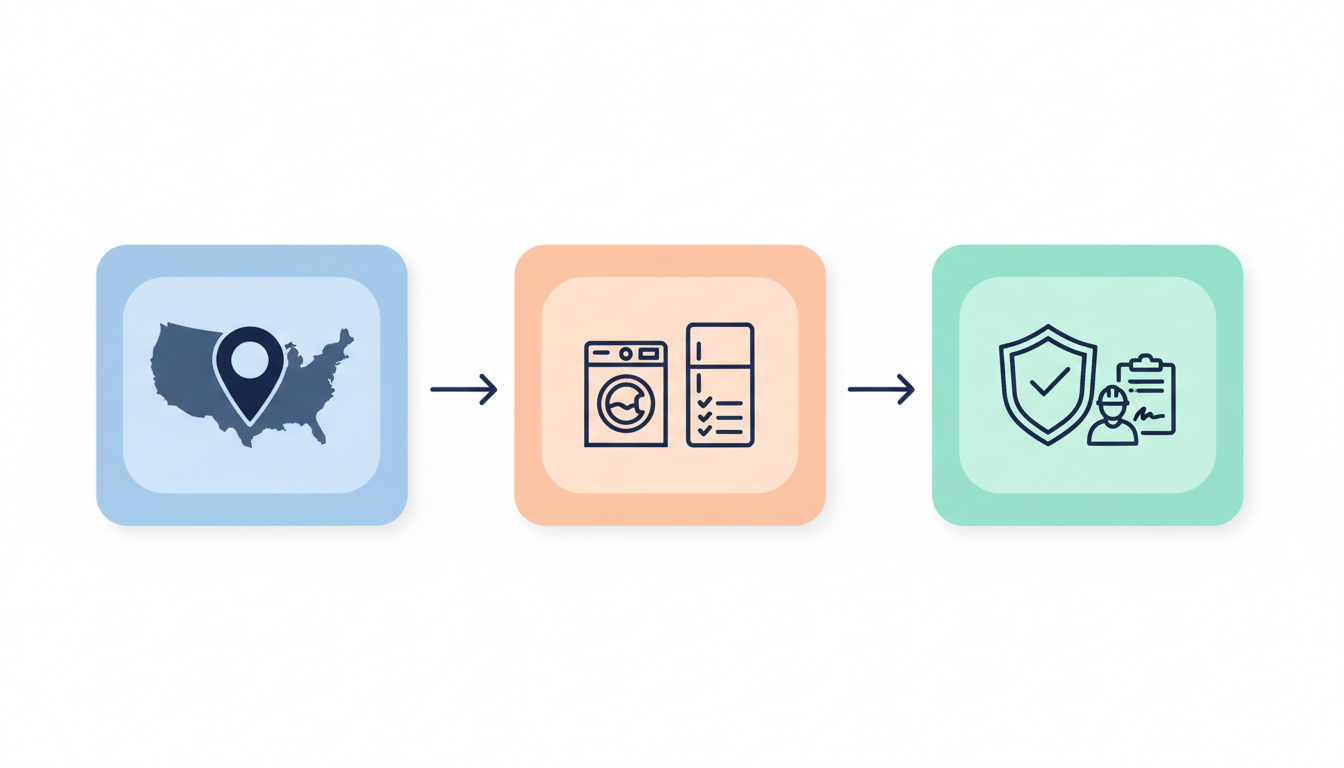
Find Your State → Verify Equipment & Income → Confirm Approval Before Purchase
7. A five-minute checklist to save before hiring
Before paying a contractor, use our Deal Reality Check for a reminder to verify the original source, the local program’s active status and any required approval before purchase.
- Write down your state, ZIP code, housing type and whether you own or rent.
- Open the DOE rebate page and follow its links to the real local administering office.
- Confirm open enrollment, product qualifications and application deadlines.
- Find out whether an approved contractor or home energy assessment is required.
- Check the final project quote, warranties and cancellation or permit rules.
- Keep copies of approved applications and receipts; do not assume retroactive reimbursement.
Frequently asked questions
Are 2026 home energy rebates available in all 50 states?
No universal availability can be inferred from federal program funding. DOE says Home Energy Rebates are available in select states; check current local implementation for your actual address.
Can I claim a rebate after I already bought an appliance?
Do not assume so. Some programs require qualification and approval before buying or installing; verify your local program rules before spending money.
Is the maximum rebate amount guaranteed?
No. Headline caps, when applicable, are limits for certain eligible projects, not a universal payment. Actual eligibility, authorized amounts, budget and timing depend on program requirements.
Will this site apply for the rebate for me?
No. Happy Perks Calendar is an independent educational guide and does not accept eligibility documents, application fees or government benefit applications.
Compare rebates with ordinary shopping deals
If you are comparing an appliance purchase during a sale, read our Black Friday price comparison checklist. Check the official rebate approval timing before shopping, because a good store price does not establish rebate eligibility. For additional topics see All Guides.
Official sources
- U.S. Department of Energy — Energy Savings Hub
- DOE — Home Energy Rebates Program and local availability
- DOE — Incentives and energy assistance overview
- Federal Trade Commission — Government grant scams
- FTC — 2026 guidance on fake grant offers
Editorial disclosure: Happy Perks Calendar is an independent information publication and is not a government website, utility company or authorized application processor. Rules and tax treatments can change, and this page is not legal or tax advice. Verify with the relevant government or program office before relying on any benefit.
Share this guide
Know someone who could use these official-source checks? Share the link. Terms and availability may change.

