
BANK ON CHECKING 2026
LOW FEES · NO OVERDRAFT FEES
Illustrative cover photo: Mikhail Nilov / Pexels (Pexels License). It does not depict a verified service recipient or an official program.
Last checked: October 11, 2026. A checking account should help you receive income, pay bills and keep funds secure, rather than surprise you with overdraft charges. In the United States, Bank On-certified accounts follow the Cities for Financial Empowerment Fund’s official 2025–2026 National Account Standards. These accounts are designed for transparent, predictable costs, but certification does not mean that every account is free or everyone will qualify to open one.
This original Happy Perks Calendar guide explains what the certified standards actually require, how to check a real account, and why deposit insurance is a separate question. We do not offer bank accounts, handle applications or collect identification documents.
At a glance: the actual 2025–2026 Bank On standards
| Bank On feature | 2025–2026 certification standard |
|---|---|
| Initial opening deposit | $25 or less |
| Non-waivable monthly fee | $5 or less |
| Waivable monthly fee | $10 or less; at least two options to avoid it with a single qualifying transaction |
| Overdraft / NSF fees | None |
| Activation, inactivity, closing, low-balance fees | None |
| In-network ATM | Free |
| Deposit insurance | FDIC, NCUSIF or an approved regulatory equivalent |
The CFE Fund publishes the full standards at Bank On National Account Standards 2025–2026. These are requirements for certification of a specific account product, not a federal promise that every bank’s standard checking account has the same features.
1. Search for an actually certified account
The official list of Bank On-certified accounts identifies the particular products that meet the national requirements. A bank may offer several checking accounts, only one of which is certified. A promotional Bank On logo on a bank’s homepage does not automatically apply to a different account in its product list.
- Start with the current Bank On certified-account directory.
- Choose an account offered online or in your local community.
- Note its exact name and its issuing bank or credit union.
- Open the institution’s own current account disclosure and fees.
- Confirm identity, age, state availability and any other application conditions before applying.
Approval is not guaranteed. A certified product can still have lawful identity-verification or past-account screening requirements. The certification is about the account features, not automatic admission of every customer.
2. No overdraft charges does not mean no costs anywhere
A Bank On-certified account cannot assess overdraft fees or non-sufficient-funds fees under the current core standards. However, the product may have a permitted monthly service charge. The standard allows a non-waivable monthly maintenance fee of $5 or less, or a fee of $10 or less when specified simple transaction-based waivers are offered.
The same standards prohibit activation, closing, dormancy, inactivity and low-balance fees. They require free in-network ATM access and include limits on certain out-of-network charges. But outside ATM operators, third-party returned-payment fees or optional paper statements can still create costs. Read the full fee schedule before treating any account as universally free.

3. Understand the $25 opening deposit
The Bank On standards specify that the minimum amount required to open a certified account is no more than $25. An opening deposit is ordinarily money that becomes part of your account balance; it is not an application or certification payment that you send to the Bank On organization.
An account could have a $0, $10 or $25 opening requirement depending on the financial institution. If a stranger says that a consumer must send cryptocurrency, gift cards or a separate processing fee to get Bank On approval, end that interaction and check with the financial institution itself.
4. Compare real costs over a year
| Illustrative account | Monthly maintenance | 12-month maintenance |
|---|---|---|
| Ordinary checking example | $12 | $144 |
| Certified low-fee example | $5 | $60 |
| Certified example with successful fee waiver | $0 | $0 |
The numbers above are invented illustrations, not quotes for real products. If someone switches from a $12 monthly maintenance fee to a $5 fee, the difference is $84 across 12 months, assuming everything else is equal. A no-fee account could save more, but only when the user meets the waiver conditions and the bank provides the features they need. Compare ATMs, bill payment, cash deposits, accessibility and online support too.
5. Verify the actual bank or credit union insurance
Bank On certification is not the same as federal deposit insurance. The FDIC GetBanked resource recommends choosing an appropriate insured institution. For FDIC-insured banks, qualifying deposits are generally protected up to $250,000 per depositor, per bank and per ownership category. Those categories matter because accounts in the same category at the same bank are generally considered together for coverage.
Federally insured credit unions use National Credit Union Share Insurance Fund (NCUSIF) rules, which are not administered by the FDIC. For an actual bank, use FDIC BankFind to check the institution. Do not assume that every payment app, cryptocurrency service or brokerage investment receives the same protection.
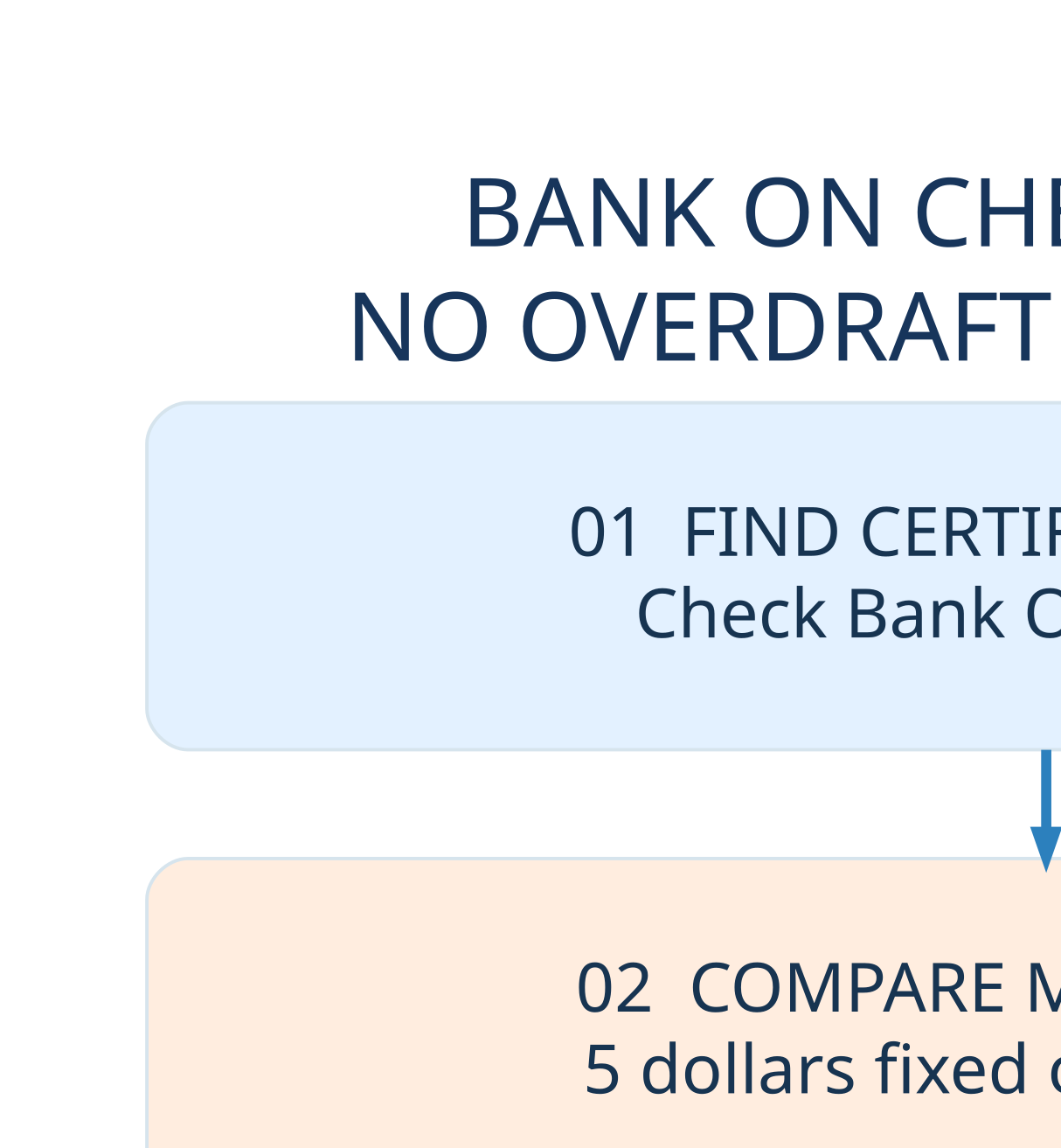
6. Eight checks before opening
- Confirm that the exact account appears on the current certified list.
- Verify the opening deposit and any monthly maintenance charge.
- Determine whether a monthly fee can be waived and how.
- Verify overdraft and NSF fees are absent for the named account.
- Check free in-network ATM availability near home and work.
- Review debit card, direct deposit, bill payment and mobile banking.
- Check that the financial institution and deposit product have appropriate insurance.
- Read account-opening eligibility, ID requirements and other limitations.
Bank On accounts can be checkless and still offer useful payment services. If paper checks or frequent cash deposits are essential, confirm that the selected account actually supports how you manage money.
7. What if you were denied an account before?
A previous banking or consumer-reporting issue does not automatically establish whether you qualify for a particular new account. Ask the institution which current eligibility and verification requirements it uses. Do not pay unknown brokers who guarantee that they can bypass a bank’s screening process.
Some banks offer additional beginner or second-chance accounts, but those are not automatically Bank On-certified. Compare the specific product and obtain official disclosures. If an account application relies on a consumer report, you may have separate rights relating to that report. Ask the financial institution how to obtain accurate instructions.
8. Make a decision around how you really use money
For someone who receives direct deposit, pays rent electronically and uses nearby network ATMs, a low-cost checkless account may be convenient. A person who must often mail paper checks, deposit cash in a particular branch or transfer money internationally should examine those costs and features before changing accounts.
Bank On separates mandatory core requirements from strongly recommended features. A recommendation to accept certain alternative identification or permit remote opening does not guarantee that every certified account will do so. The issuing institution’s current terms determine how to apply.
Frequently asked questions
Q: Is Bank On a bank? No. Bank On is a national certification and financial-access initiative supported by the CFE Fund, and consumers open named products at participating institutions.
Q: Must a Bank On-certified account have no monthly fee? No. The official standard sets limits and possible waiver methods, but some accounts charge a modest monthly amount.
Q: Can the certified account charge overdraft or NSF penalties? The Bank On 2025–2026 core standards specify no overdraft or NSF fees.
Q: Is the $25 minimum opening amount a government fee? No. It is a maximum opening deposit standard, typically funds placed in your account, not a fee to a certification office.
Q: Will every applicant be approved? No. Identity and eligibility checks still apply.
Q: Are investment losses insured by the FDIC? No. FDIC insurance generally protects qualifying deposits at insured banks, not the performance of investments such as stocks or cryptocurrencies.
Related Happy Perks Calendar resources
To review reports used in financial decisions, see our free weekly credit reports guide. If you are checking old funds reported to a state, use the unclaimed-property search guide. Before accepting a financial promotion, follow the Deal Reality Check.
Official sources reviewed
- CFE Fund — Bank On 2025–2026 Account Standards
- Bank On — Current Certified Accounts
- Bank On — Official Resources
- FDIC — GetBanked
- FDIC — Deposit Insurance
- FDIC — BankFind
Independent editorial disclosure: Happy Perks Calendar is not a financial institution or investment adviser, and does not take account applications, receive commissions for approval or store personal banking data. Terms and eligibility may change. Always verify directly with the institution.
Share this guide
Know someone who could use these official-source checks? Share the link. Terms and availability may change.

